Federal Regulators Mandate Cyan Lights for Driverless Cars in New Safety Proposal
The National Highway Traffic Safety Administration has proposed a standardized blue-green light to help identify autonomous vehicles on the road, aiming to cut through the visual noise of traditional traffic signals.
By Thabo Mokoena ·
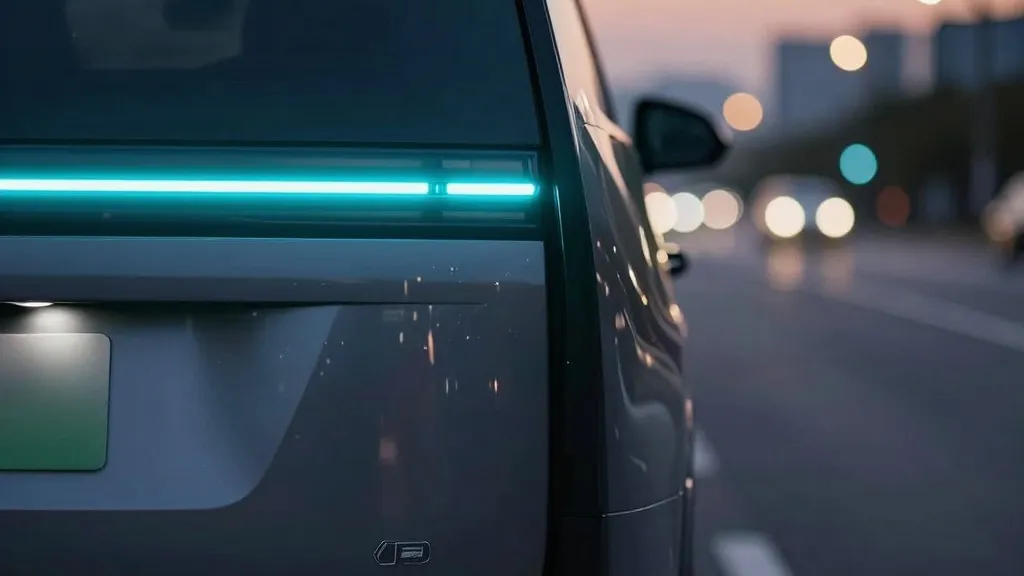
The most significant visual change proposed for the future of American roads is not a new color, but the specific shade of blue-green known as cyan. Federal regulators have moved to standardize this hue as the primary external signal for vehicles operating without a human driver, a decision that resolves a years-long industry debate over how driverless cars should announce their status to the public.
The National Highway Traffic Safety Administration (NHTSA) has released proposed revisions to Federal Motor Vehicle Safety Standard No. 108, specifically targeting the lighting requirements for autonomous vehicles. The agency proposes that cyan-colored marker lamps be used to clearly indicate when an automated driving system is in control. This specific color was selected because the existing automotive palette is heavily utilized; red and amber dominate brake lights and turn signals, while white is reserved for headlights and flashing blue or red lights are associated with emergency vehicles. Cyan, theoretically, occupies an unoccupied visual niche, reducing the likelihood of confusion among other road users and law enforcement officers.
While the proposal is not yet a final mandate, it establishes the groundwork for a uniform national standard. NHTSA aims to create official specifications for the color, brightness, and physical location of these lights. Although the use of cyan marker lights would remain optional for manufacturers, the agency intends to ensure that any automaker choosing to implement them does so using a consistent, legally defined setup. This approach seeks to prevent a fragmented market where different companies use varying colors or signal patterns, which could potentially confuse drivers sharing the road with robotaxis.
The proposal aligns with the interests of major players in the autonomous vehicle sector, including robotaxi operators like Waymo, Nuro, and Zoox, as well as traditional automakers such as GM and Mercedes-Benz. There is existing precedent for this type of signaling; Mercedes-Benz previously received state-level approval for turquoise lights on its Level 3 Drive Pilot vehicles. Although the automaker later shifted its strategy toward a Level 2++ system, the federal move now offers a broader, nationwide framework that these companies can adopt uniformly, providing a clear path for compliance across different jurisdictions.
Beyond the new addition of cyan lights, NHTSA is also proposing to remove several lighting requirements that are logically incompatible with driverless designs. Current rules mandate the presence of physical hazard switches, manual beam shifters, and turn levers inside the vehicle cabin. The agency proposes eliminating these requirements, recognizing that a vehicle without a human driver does not need manual controls for these functions. Additionally, the agency is updating the 12.8-volt testing standard to accommodate modern LED architectures, aiming to reduce administrative hurdles for manufacturers building with contemporary technology.
The department is also considering revisions to the spatial arrangement of headlights, specifically looking at removing requirements that dictate whether high-beam lights must be positioned above or below low-beam lights. This flexibility is part of a broader administrative push by the Department of Transportation to streamline the deployment of autonomous vehicles. The overarching goal is to make it easier for automakers to design cars that lack traditional human-centric controls, such as steering wheels and pedals, which are often unnecessary in fully automated systems.
However, the regulatory landscape remains complex, as agencies are simultaneously trying to modernize rules while enforcing existing ones. Last month, NHTSA opened an audit query into the Tesla Cybercab to examine the technical data and processes Tesla relied on when certifying the vehicle. The inquiry focuses on the absence of certain design features, including sideview mirrors, pedals, and a steering wheel, all of which are currently required under FMVSS. This simultaneous enforcement and relaxation of rules highlights the transitional nature of the current regulatory framework.
The stakes for the autonomous vehicle industry are high as it moves toward greater integration into daily traffic. By standardizing the visual language of driverless cars, regulators hope to enhance safety and public understanding. The shift from ad-hoc corporate signaling to a federal standard represents a significant step in legitimizing the technology, even as questions about the physical design of these vehicles continue to be scrutinized through audits and certification processes.
For consumers and other drivers, the arrival of cyan lights on the road will serve as a definitive cue that the vehicle is not being piloted by a human. While the lights are currently proposed as optional, the federal backing suggests they may become a de facto standard for serious autonomous vehicle programs. As the debate continues over the precise technical specifications, the core message is clear: the era of driverless cars is moving toward a unified visual identity, with cyan serving as its primary marker.
Source: The Verge